


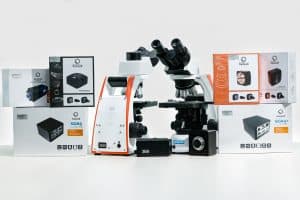
In laboratory practicals, research, and observations, microscopes are not always used solely to view specimens directly. In some activities, the results of observations also need to be documented, presented to students or colleagues, or used as part of presentations and research.
Therefore, in addition to considering magnification and the optical system, the microscope head configuration must also be taken into account. The OptiLab IRIS-4 is available with a choice of Siedentopf binocular and trinocular heads, allowing users to select a configuration based on their observation and documentation needs.
Getting to Know OptiLab IRIS-4
The OptiLab IRIS-4 is a biological microscope designed for observing specimens in routine work and research applications. It is used to observe living cells and tissue specimens in fields such as genetics, human blood and tissue analysis, neurology, pharmacology, and cell biology.
One of the interesting features of the IRIS-4 is that it offers two head configuration options: binocular and Siedentopf trinocular. Both have a 30° inclination, can rotate 360°, and feature an interpupillary distance adjustment range of 48–75 mm.
These options provide institutions with the flexibility to tailor the microscope to their specific usage patterns. Binocular microscopes are designed primarily for direct observation through both eyepieces, while trinocular microscopes provide an additional port for camera and documentation needs. Therefore, before deciding on the IRIS-4 configuration, it is important to first understand the differences between binocular and trinocular microscopes and how each is used in laboratory settings.
Binocular or Trinocular? Choose Based on Your Laboratory's Needs
One factor to consider when choosing the OptiLab IRIS-4 is the available head configurations. This product offers both binocular and Siedentopf trinocular heads, allowing prospective users to select the configuration that best suits their laboratory’s needs.
This difference is one factor to consider when determining the IRIS-4 configuration. If the camera is needed only occasionally, the binocular configuration can provide additional flexibility. However, if the camera is a regular part of observation, documentation, or the presentation of observation results, the trinocular configuration may be a more suitable choice.
Binoculars for Direct Observation
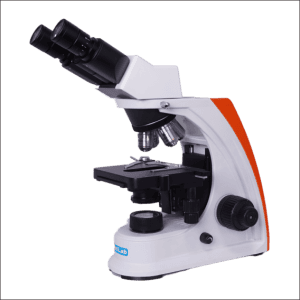
Binocular heads provide two viewing paths through the eyepieces, allowing users to observe directly with both eyes. The interpupillary distance can be adjusted within a range of 48–75 mm, while a ±5 focus adjustment is available to accommodate the user’s needs.

This configuration may be a good option for laboratories where most activities focus on direct observation. However, the binocular head can also be used with a camera by placing the camera in one of the observation channels. Consequently, when the camera is in use, one of the eyepiece channels is occupied by the camera, so the user cannot use both eyepieces for observation simultaneously, as they would under normal conditions.
Under these conditions, one of the eyepiece paths is used by the camera, so the user cannot observe through both eyepieces at the same time. In other words, the binocular configuration still offers documentation options, but there is a trade-off regarding the observation path when the camera is in use.
Therefore, a binocular setup may be the best option when the primary need is direct observation and a camera is required only for specific documentation or occasional use.
Trinocular Microscope for Observation and Documentation
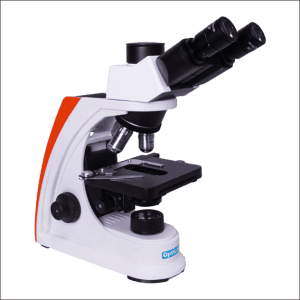
The trinocular head features an additional channel that allows for camera configuration without having to use either of the two main ocular channels. According to Miconos’ product information, the IRIS-4 trinocular version is equipped with a camera port and features light distribution ratio 20:80.
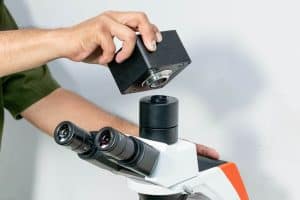
This configuration is better suited for laboratories that require photo or video documentation as part of their observation activities. The use of cameras can also support the need to visualize observation results, such as when those results need to be presented in educational activities, presentations, or research documentation.
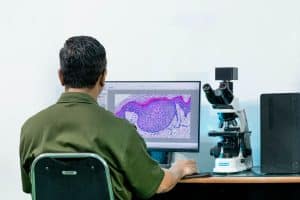
Thus, choosing between a binocular or trinocular setup is not simply a matter of selecting a higher-end configuration, but rather of tailoring it to one’s usage patterns. Such configurations become more relevant when the camera is not just used occasionally, but has become an integral part of laboratory activities. For example, for photo or video documentation, demonstrations to students, presentations of observation results, or visualizing specimens for multiple people at once.
Comparison of the OptiLab IRIS-4 Binocular and Trinocular Models
Once you understand the characteristics of each configuration, the differences between binocular and trinocular setups become apparent in how they are used for observation and documentation. Both support direct observation, but offer different levels of flexibility when a camera is used. The following comparison can help you determine which configuration is better suited to your laboratory’s needs.
| Needs | Binokuler | Trinokuler |
| Direct observation | ✓ | ✓ |
| Two eyepieces | ✓ | ✓ |
| Supports the OptiLab camera | ✓ | ✓ |
| The camera is used without taking either of the ocular paths | — | ✓ |
| Great for demonstrations in front of large crowds | Limited | More flexible |
| Regular use of the camera | More limited | More appropriate |
| Key considerations | Direct observation | Observation + documentation/visualization needs |
Based on this comparison, the configuration should be chosen based on how often the camera is used and how the observation results will be utilized.
So, Which One Should You Choose?
The choice between a binocular and a trinocular microscope should not be based on the assumption that one is always better than the other. Both have different functions and uses. Choosing a microscope for a laboratory is not only a matter of magnification, but also of how the instrument will be used in day-to-day activities. Factors such as the need for direct observation, documentation, lighting, resource flexibility, and head configuration should be considered before selecting the appropriate device.
Binocular and trinocular options allow you to choose a configuration based on your needs. Binoculars may be the best choice when direct observation is the primary activity, while trinoculars are more suitable when photography, documentation, and visualization of observation results are part of laboratory activities.
OptiLab IRIS-4 Has Met the TKDN Requirements
In addition to considering configuration and usage requirements, procurement considerations can also play an important role in the selection of laboratory equipment. The OptiLab IRIS-4 meets TKDN (Domestic Component Content) requirements, making it a viable option for institutions that prioritize the use of domestically produced products in their procurement processes.
For universities, hospitals, laboratories, and other institutions, the TKDN requirement can be a value-added factor when selecting equipment—not only based on technical specifications but also on procurement policy considerations. As such, the OptiLab IRIS-4 offers both binocular and trinocular configuration options while supporting the needs of institutions that prioritize products with domestic content.
Want to Learn About All the Features of the OptiLab IRIS-4?
The choice of objective is just one part of the microscope’s configuration. The OptiLab IRIS-4 also features a Plan Infinity Objective system, 3-watt LED illumination, a 3000 mAh backup battery, and various mechanical features to support observation. Visit the related article
Interested in learning more about OptiLab IRIS-4? Visit our product page to view the complete specifications and features of the microscopes offered.***