


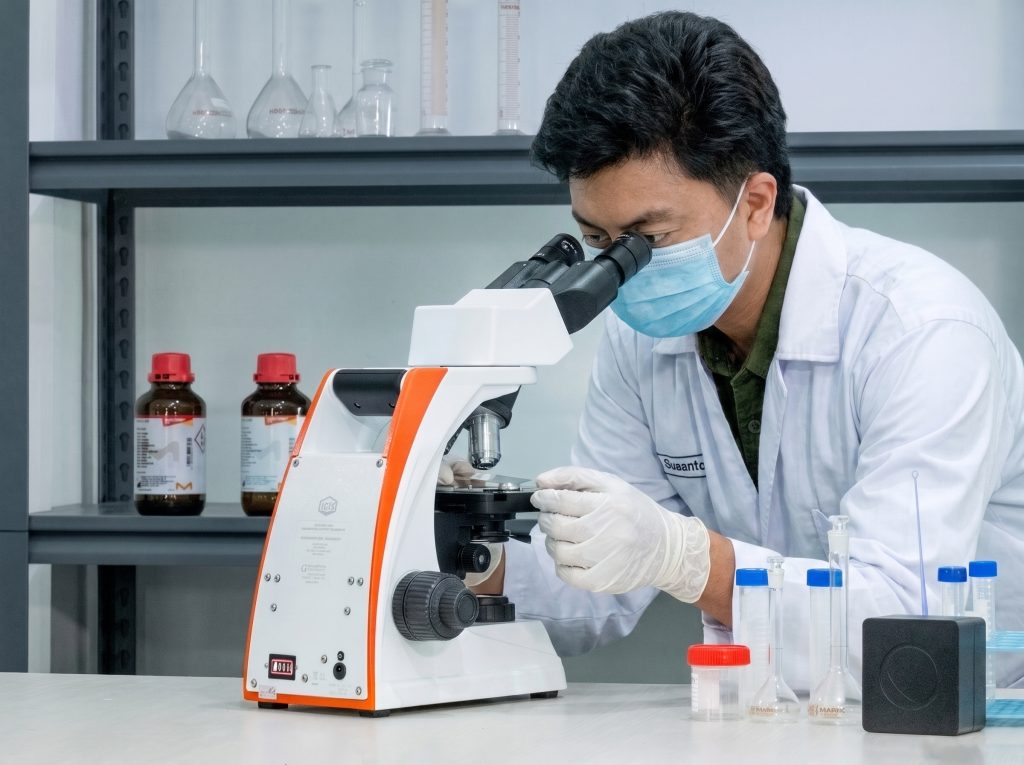
In a biology laboratory, many objects are too small to be observed directly. Cells, tissues, microorganisms, and various biological structures require tools to produce images that can be studied more clearly. Therefore, microscopes in biology laboratories are one of the most important instruments for supporting learning, research, and the observation of specimens.
Choosing a microscope isn’t just about the magnification level. The type of specimen, observation method, optical system, lighting, and documentation needs must also be considered to ensure the instrument is suitable for laboratory activities.
Types of Microscopes in a Biology Laboratory
Microscopes can be classified based on their imaging principles and observation requirements. Some types commonly used in biology include light microscopes, stereo microscopes, fluorescence microscopes, and electron microscopes. Each has different characteristics and applications.
Light Microscopes for Specimen Observation
The light microscope is one of the most widely used types of microscopes in biology education and laboratories. In its operation, light serves as the illumination source and works in conjunction with the lens system to produce an image of the specimen.
Various biological specimens, such as cells, tissues, microorganisms, and plant structures, can be observed using this type of microscope. For example, the OptiLab IRIS-4 uses a Plan Infinity optical system with a choice of 4X, 10X, 40X, and 100X/1.25 Oil objectives.
Stereo Microscope for Larger Objects
Stereo microscopes have relatively lower magnification and are designed to provide a wider field of view. This type of microscope can be used to observe larger or thicker objects, including specimens that require direct surface observation and manipulation.
Fluorescence Microscope for Observation with Specific Markers
Meanwhile, fluorescence microscopy is a type of light microscopy that uses fluorescence to visualize specific structures in a specimen. This technique can be used in biological research when specific structures or molecules are labeled with fluorescent markers.
Electron Microscopes for Higher Resolution
Unlike light microscopes, electron microscopes use a beam of electrons to produce images. Transmission electron microscopes (TEMs) are used to view the internal structure of very thin specimens, while scanning electron microscopes (SEMs) are used to observe surface characteristics. They are more commonly used in research that requires higher resolution.
From Observation to Digital Documentation
In addition to direct observation, laboratory needs may include documenting the results of observations. A microscope camera allows images or videos of specimens to be displayed on a screen and saved for research, educational, or reporting purposes.
Microscopes with a trinocular configuration feature an additional port that can be used for camera integration. With this configuration, users can continue to observe through both eyepieces while simultaneously using the camera to display or document their observations.
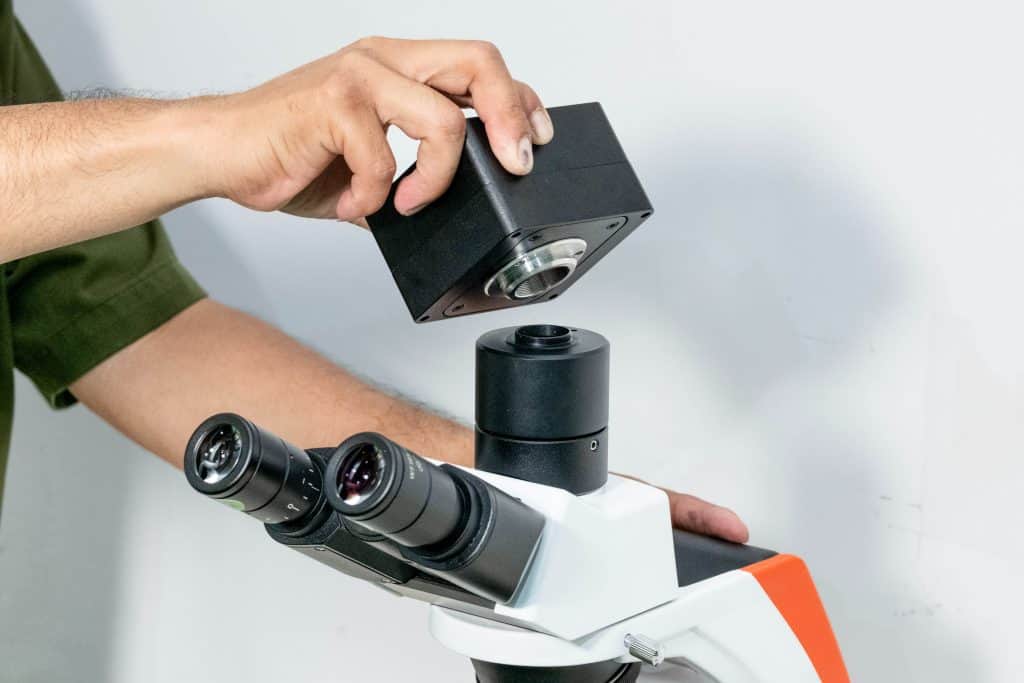
As with the OptiLab IRIS-4 Trinocular Microscope, this configuration can support both documentation and visualization of observation results.
Choosing a Microscope for a Biology Lab
Ultimately, the choice of microscope must be tailored to the specimen, the observation method, the level of detail required, and the intended use. For various biological applications involving cell, tissue, microorganism, or plant structure specimens, the light microscope is a commonly used option because it supports observation using visible light and an optical lens system, while other types of microscopes are used when observation requirements are more specific.
If a laboratory requires digital documentation, a trinocular microscope with a camera may be an option to consider. The OptiLab IRIS-4 Trinocular combines a Plan Infinity optical system with a camera path to support both observation and digital documentation. See the full specifications and product information for the OptiLab IRIS-4 at Miconos product page.