


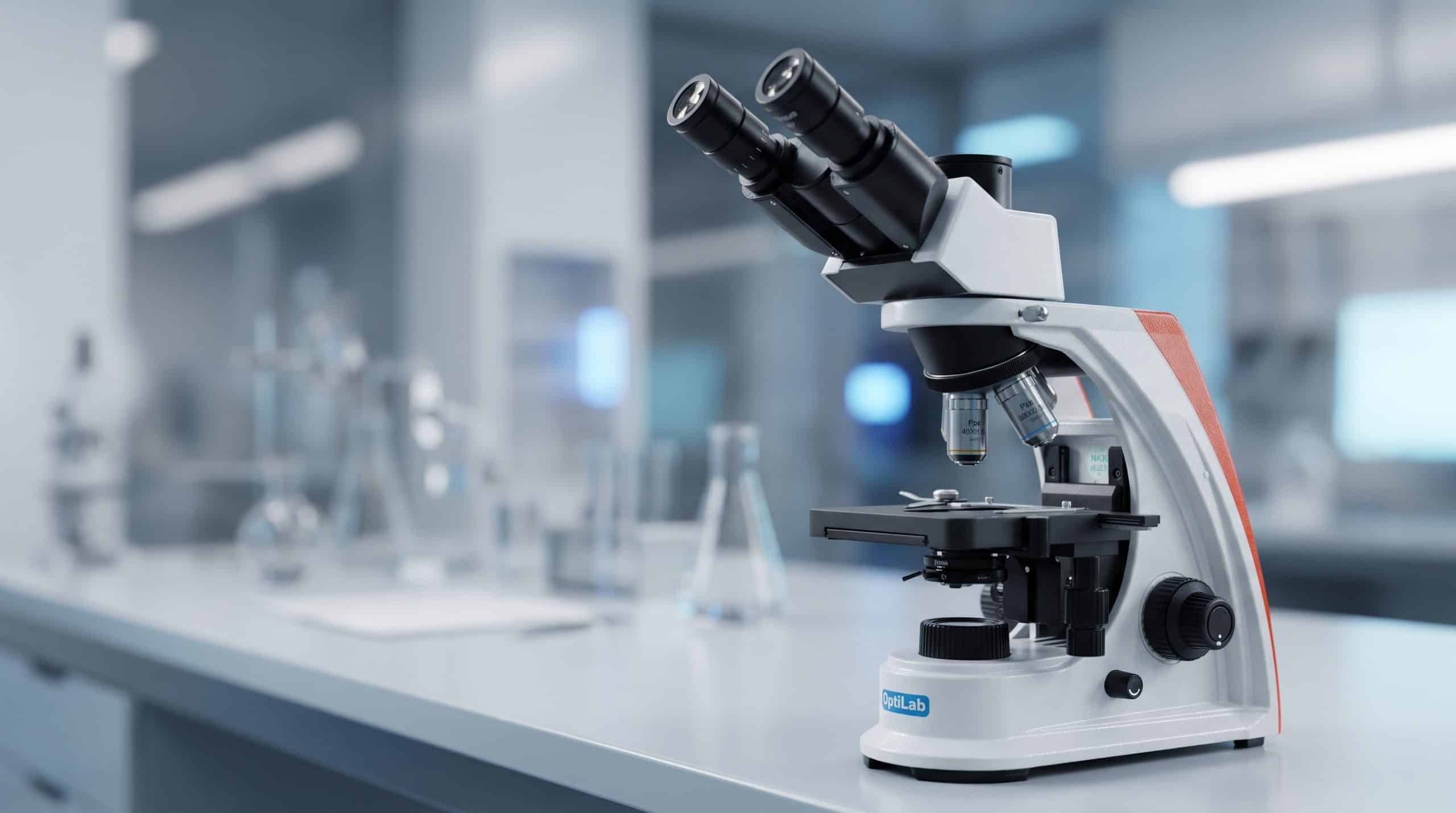
In clinical diagnostics, biological research, and industrial quality control, a microscope is far more than a simple magnifying tool. The absolute core of this instrument lies in its optical system—namely the objective lenses, eyepieces, and condenser. No matter how advanced the mechanical features of a microscope are, if the microscope optical quality is subpar, the resulting observation data will be highly susceptible to misinterpretation.
Here are the primary reasons why the quality of optical components is the ultimate deciding factor for laboratory accuracy:
1. Resolving Power Dictates Fine Details
High magnification is virtually useless without adequate resolution. Resolving power is the optical ability to distinguish two closely spaced points as separate, distinct entities. Lenses with a high Numerical Aperture (NA) gather more light, ensuring that minute details—such as cell organelle structures or bacterial membranes—appear sharp rather than blurry. blur.
2. Color Accuracy for Specimen Identification
Many laboratory observations, particularly in histopathology or microbiology, rely heavily onstaininglike Gram or Hematoxylin-Eosin (H&E) stains. High-tier optical lenses are engineered to transmit the light spectrum accurately without distorting the specimen's true colors. With low-quality lenses, color shifting can occur, potentially leading to critical diagnostic or identification errors.
3. Correction of Chromatic and Spherical Aberrations
Standard lenses often produce distortions at the edges of the field of view, known as spherical aberration (blurring at the edges) or chromatic aberration (color fringing or halos around the object). Premium lenses, such as Plan Achromatic or Plan Apochromaticare specifically designed to flatten the field of view and correct color refraction. This ensures the specimen appears flat and evenly focused from the center directly to the periphery.
4. Direct Impact on Digital Documentation
Today, the digitization of observation results is standard practice across laboratories. It is crucial to remember that a microscope camera can only capture images as well as the optical system allows. Poor optics will inherently result in digital photos plagued by noise, low contrast, and a loss of critical data.
To ensure your laboratory documentation meets rigorous medical and academic publication standards, pair your high-quality optics with an OptiLab digital camera system by PT Miconos. Featuring highly sensitive sensors and precision software, OptiLab guarantees that every intricate detail transmitted by your objective lenses is captured flawlessly, with zero compromise on visual integrity.