


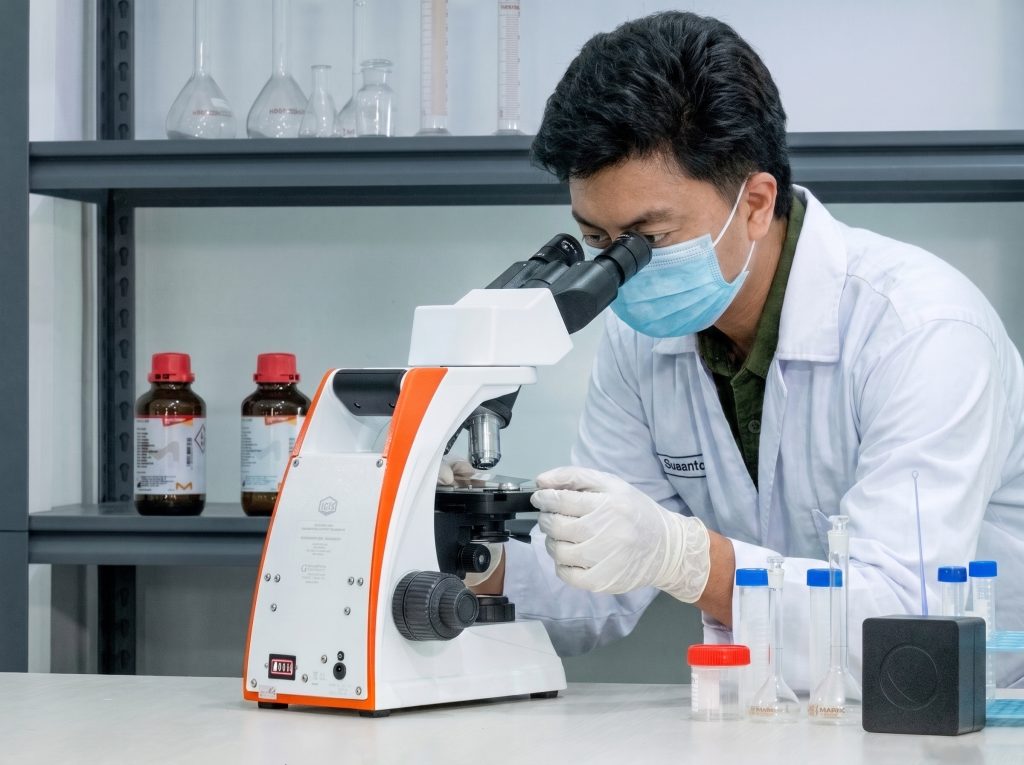
Have you ever wondered just how small an object can actually be observed using a microscope? This instrument allows us to see various objects that are too small to be observed directly, ranging from blood cells to microorganisms. However, every microscope has limitations in its ability to display objects and their details.
This capability is determined not only by magnification, but also by the resolution and quality of the optical system. So, what is the smallest object that can still be observed using a microscope?
Understanding Object Sizes in the Microscopic World
To understand the capabilities of a microscope, we need to be familiar with the range of sizes of objects typically encountered during observation. For example:
- Human hair: about 50–100 micrometers (µm).
- Red blood cells: about 7–8 µm.
- Bacteria: generally around 0.5–5 µm.
- Virus: Many are about 20–300 nanometers (nm) in size.
These measurements show that microscopic objects vary widely in size. Some can be observed using a light microscope, while much smaller objects require technology with higher resolution.
Limitations of Light Microscopes
Conventional light microscopes generally have a resolution of about 0.2 µm or 200 nm under optimal conditions. Resolution is the instrument’s ability to distinguish two adjacent points so that they appear as two separate details.
With this capability, cells, tissues, and many types of bacteria can be observed using a light microscope. However, most viruses are too small to be observed in detail with this type of microscope.
To observe structures that are much smaller, researchers can use electron microscopes, such as a transmission electron microscope (TEM) or a scanning electron microscope (SEM).
What Factors Affect the Details of Observation Results?
There are several factors that determine how clearly small objects can be seen:
- Objective lens quality: affects the sharpness and the optical system's ability to render detail.
- Numerische Apertur (NA): related to a lens's ability to gather light and produce resolution.
- Lighting and sample preparation: helps produce clearer images that accurately capture the subject's characteristics.
Therefore, higher magnification alone does not guarantee better observational detail. Magnification must be accompanied by adequate resolution.
Choose a Microscope Based on Your Observation Needs
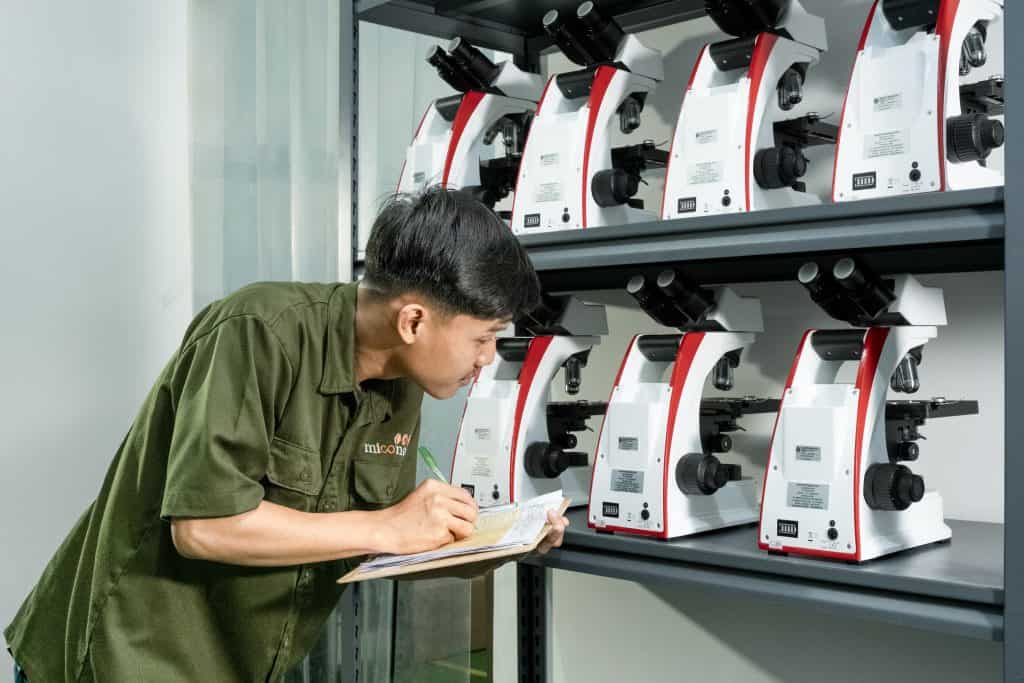
OptiLab by PT Miconos offers a selection of microscopes to support educational, laboratory, and biological observation activities, including the OptiLab Iris series. When selecting a device, you should consider the type of sample, the level of detail required, and the optical specifications.
To determine which microscope is best suited for your observation needs, Visit the official website of PT Miconos.