


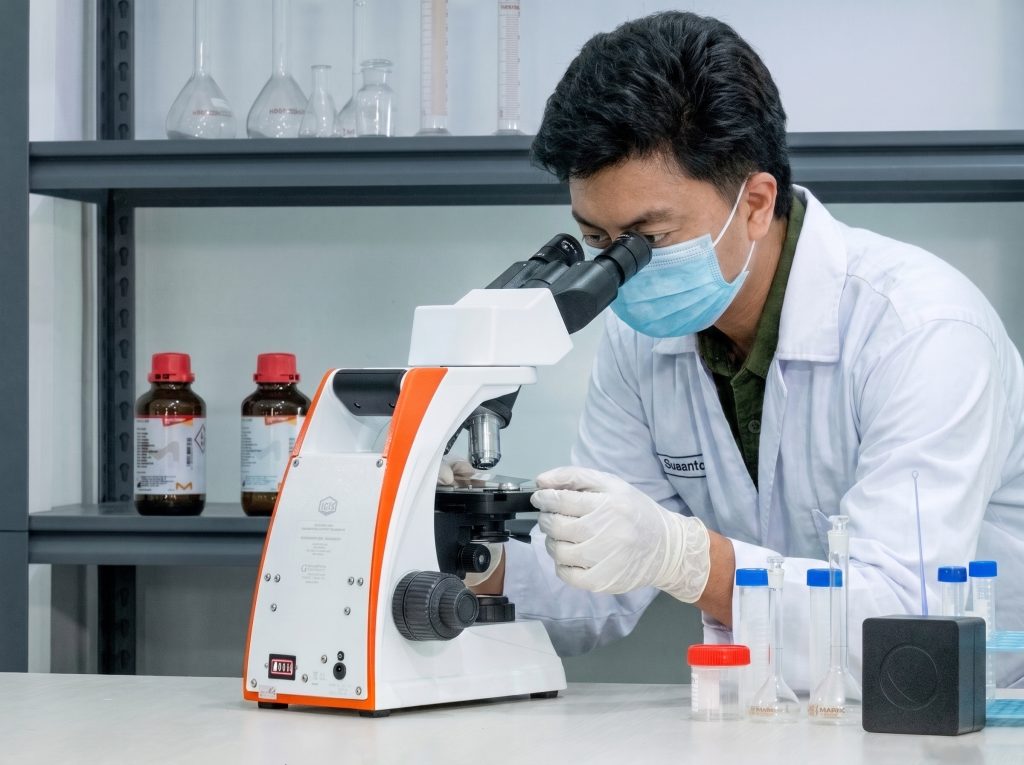
Microscopes allow people to observe extremely small objects that are difficult or even impossible to see with the naked eye. These instruments are widely used in education, research, and laboratory testing. But how exactly do microscopes work to make small objects appear larger and clearer?
Understanding How a Microscope Works
A light microscope works by using light and a lens system to magnify the view of an object. Light is directed toward the specimen, then passes through the objective lens and the eyepiece before finally reaching the observer’s eye.
The two lenses play complementary roles. The objective lens forms the initial image of the observed object, while the eyepiece lens magnifies that image so it can be seen more clearly.
Functions of the Objective Lens and the Eyepiece Lens
The objective lens is positioned close to the specimen and plays a key role in determining the magnification and image detail. Biological microscopes typically offer several objective lens options, such as 4x, 10x, 40x, and 100x.
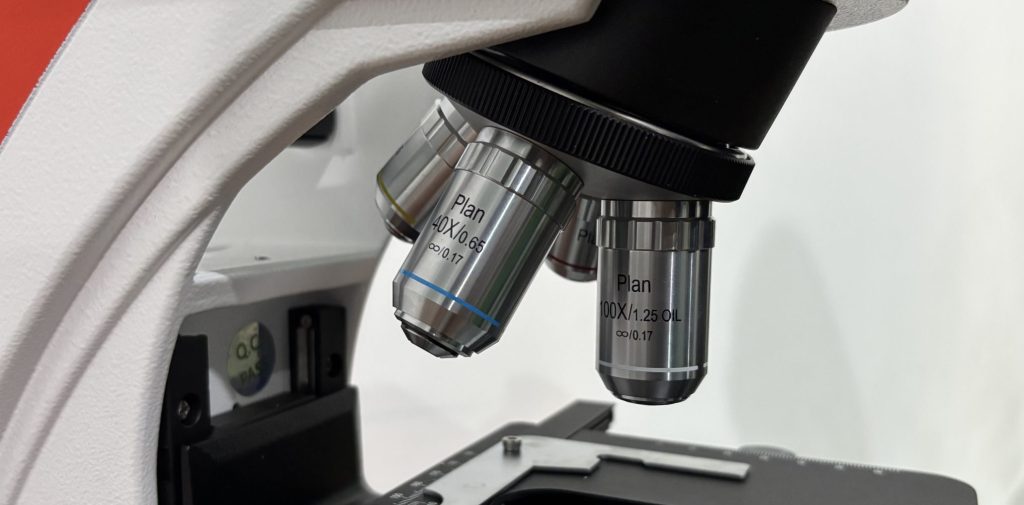
Meanwhile, the eyepiece is located at the top of the microscope and is used to view the image formed by the objective lens. If the eyepiece has a magnification of 10x and the objective lens used has a magnification of 40x, the total magnification of the microscope is 400x.
How Is Microscope Magnification Calculated?
The total magnification of a microscope is obtained by multiplying the magnification of the objective lens by that of the eyepiece.
Total magnification formula:
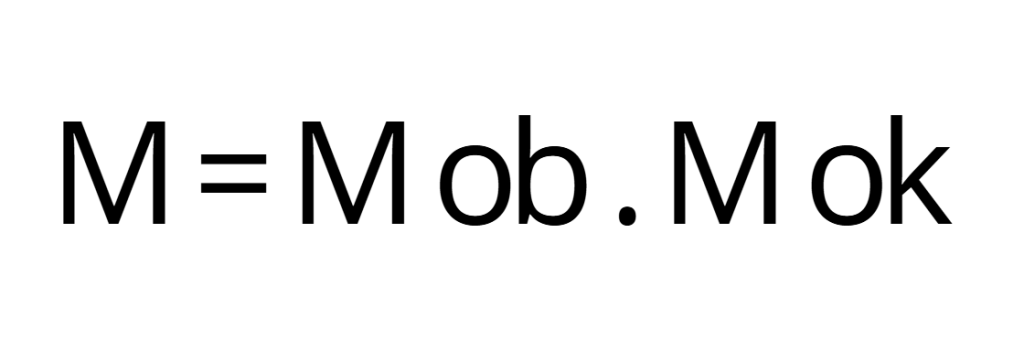
- M: Total magnification of the microscope
- M ob: Magnification of the objective lens (the lens closest to the object)
- M ok: Magnification of the eyepiece (the lens closest to the observer's eye)
Total magnification = Objective magnification × Eyepiece magnification
For example, using a 10x objective lens with a 10x eyepiece results in a total magnification of 100x. If the objective lens is replaced with a 40x lens, the total magnification becomes 400x.
However, higher magnification does not always result in a clearer image. The microscope’s optical quality, lighting, focus, and resolution capabilities also affect the level of detail that can be observed in an object.
The Importance of Focus and Lighting Settings
To see the object clearly, the observer needs to adjust the focus and lighting properly. The coarse focus control helps locate the object’s image, while the fine focus control is used to sharpen the image.
In addition, the light intensity and the position of the condenser must be adjusted according to the type of specimen. Proper adjustments help ensure a more comfortable and detailed observation.
Get to Know Microscopes for Observation Purposes
Understanding how a microscope works helps users make more effective use of its magnification and optical settings. To support educational, research, and laboratory activities, explore the various microscope options and OptiLab microscope cameras on PT Miconos’s official website at www.miconos.co.id.