


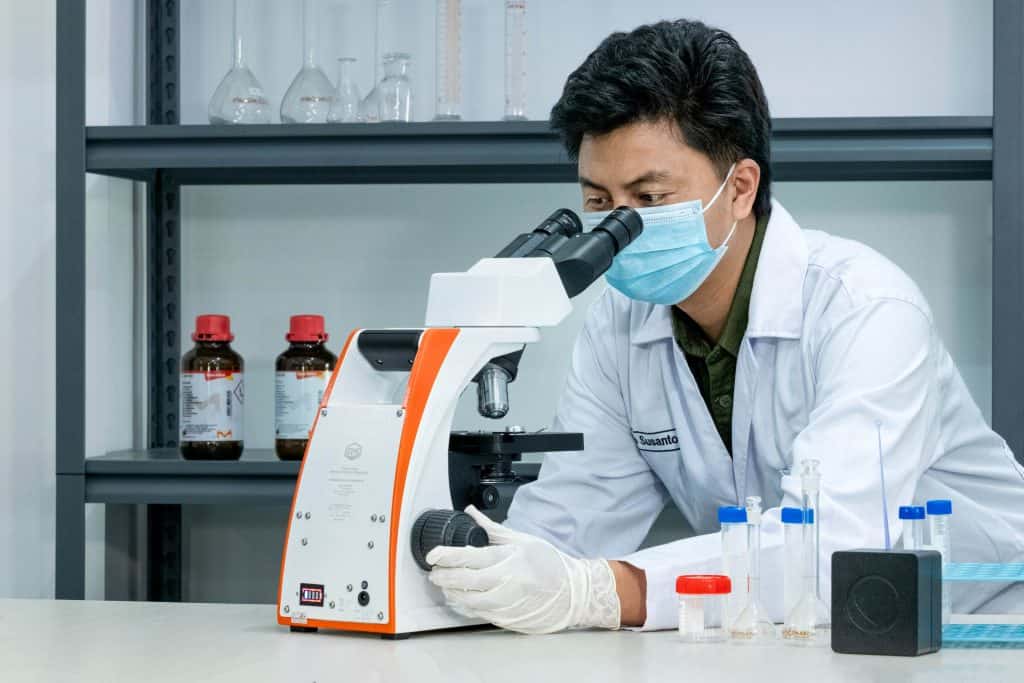
Microscopes are essential tools in various research activities, especially when the objects being observed are very small. However, the requirements of each research project may vary. Therefore, when selecting a microscope for research, one should not base the decision solely on the magnification level but also consider the available features and optical systems.
The right microscope can make observations more comfortable. In addition, the right equipment can also support the documentation and analysis of research results.
Optical Systems That Support Observation
The optical system is one of the key factors to consider. The quality of the objective and eyepiece also affects the level of detail visible in the image.
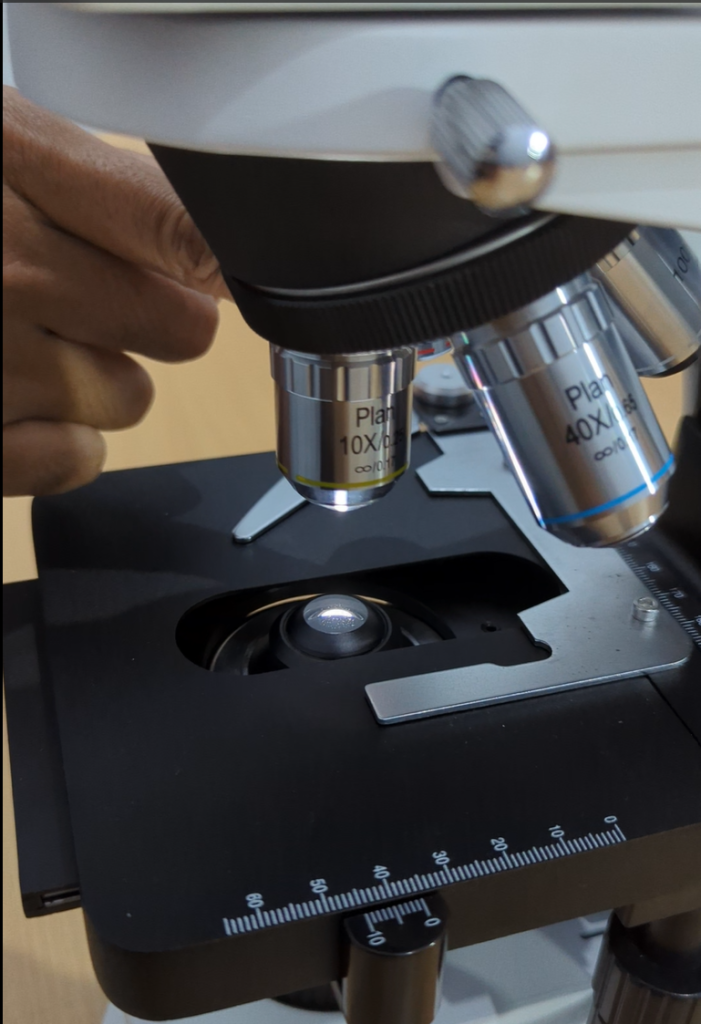
For example, a microscope equipped with a Plan objective can provide a better viewing experience. This type of objective offers a more uniform field of view, allowing the details of the object to be clearly observed from the center to the edges of the field of view.
In addition to optical quality, also consider the available magnification range. For biological research, magnification up to 1000X can help you observe very small objects.
Precision Focus System
Research often requires detailed observation of samples. Therefore, the focusing system is also an important feature to consider.
A microscope with coaxial coarse and fine focus allows users to adjust the focus more easily and precisely. With these settings, a clearer image of the object can be obtained during observation.
Preparation Table with Position Adjustment
In addition to the focusing system, the specimen stage also requires attention. This feature is important when research requires observation of a specific area of a sample.
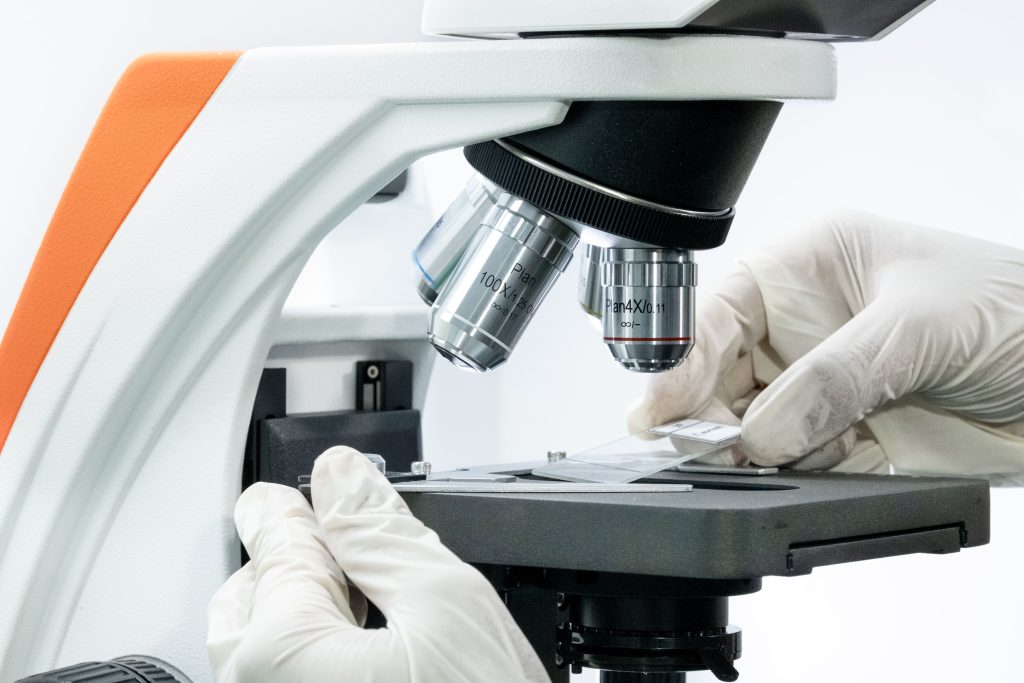
With the position adjuster, the specimen can be moved with greater precision. As a result, users can locate the part of the object they wish to observe without having to move the specimen manually.
Stable Lighting
Lighting also affects the clarity of the object being observed. Therefore, LED systems can be a good choice for laboratory use because they are practical and provide stable lighting.
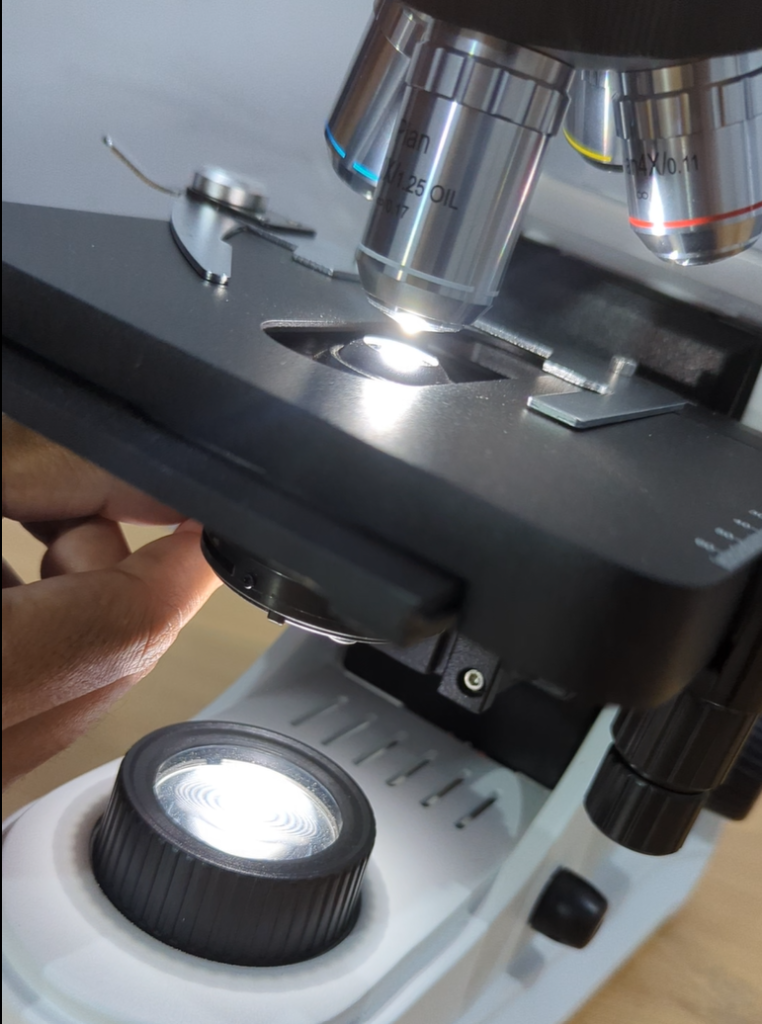
In addition to the light source, pay attention to the condenser and its intensity settings. These adjustments help users achieve lighting that suits their observation needs.
Documentation and Connectivity Features
In research, observational results often need to be stored, shared, or reanalyzed. Therefore, a microscope that can be paired with a digital microscope camera can support documentation needs.
In addition to the camera, connectivity to a computer or external display can also help display the observation results digitally.
In conclusion, a microscope for research should be selected based on the type of sample, magnification requirements, ease of observation, and documentation needs. By considering these various features from the outset, the equipment used will be better suited to research needs and laboratory activities.
Binocular or Trinocular Head Options
For routine use, binocular microscopes allow users to observe samples with both eyes, making the process more comfortable.
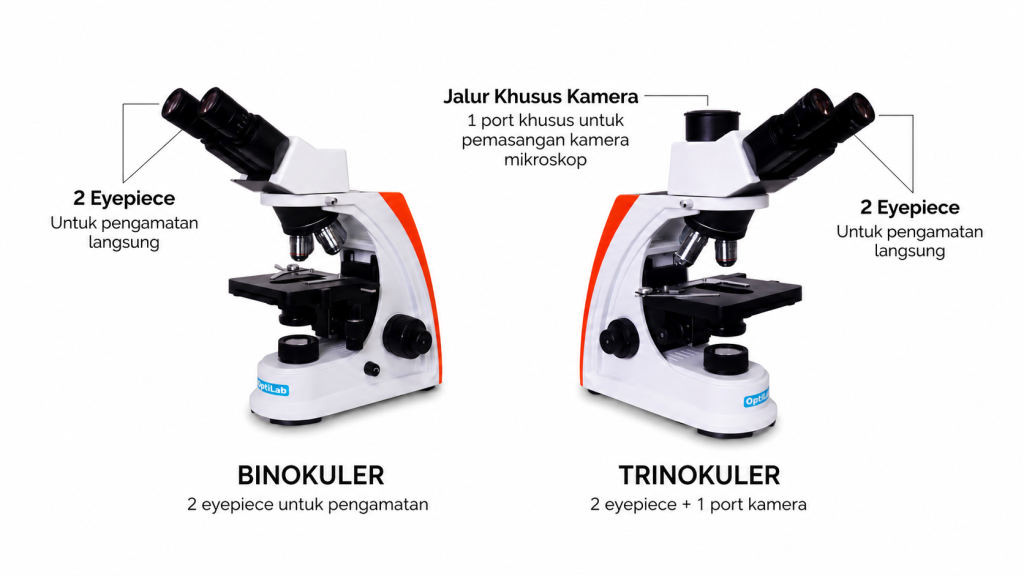
Meanwhile, the trinocular head has an additional optical path for a camera. With this feature, observations can be documented as images or videos.
Looking for a microscope for your research needs? Discover a wide selection of OptiLab microscopes at PT Miconos' official website or Discuss your needs with our team.