


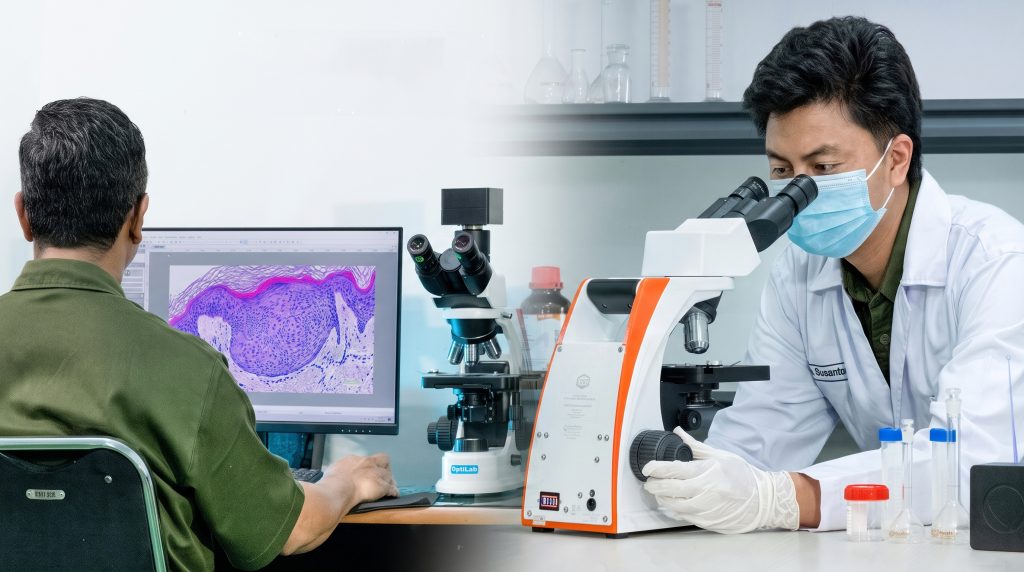
Digital microscopes and conventional microscopes differ in how they are used, particularly in terms of displaying and documenting observations. Both can be used for a variety of laboratory needs, but their practicality depends on the user’s activities and requirements.
As technology advances, microscopes are no longer used solely through the eyepiece. Cameras and digital systems can now help display, save, and share observation results more conveniently.
Conventional Microscopes for Direct Observation
Conventional microscopes rely on optical systems and eyepieces as the primary means of observing specimens. The user views the object directly through the eyepiece after the specimen has been placed on the stage.
This type of setup is widely used in educational settings, biology labs, and routine specimen observation. Users can adjust the focus and magnification as needed without requiring any additional digital devices.
In addition, a conventional microscope may be the best choice when the primary activity requires only direct observation by a single user. The system is also relatively simple because it does not rely on a computer or monitor to display the object.
Digital Microscopes for Observation and Documentation
Unlike conventional microscopes, digital microscopes use a camera to capture images of specimens and display them on a screen. In this way, the results of the observation can be viewed not only through the eyepiece but also displayed in digital form.
These advantages become even more apparent when observation results need to be documented. Images and videos can be saved for use in learning, research, reports, or presentations.
In addition, the digital display allows multiple people to view the same object at the same time. This can facilitate learning, as instructors and students can observe specimens on the screen without having to take turns using the eyepieces.
Which Is More Practical?
When comparing their uses, digital microscopes and conventional microscopes each offer different advantages. Conventional microscopes are simpler for direct observation; users can view specimens directly through the eyepiece without needing an additional digital system. Meanwhile, digital systems are more practical when documentation and visualization are routine parts of laboratory activities.
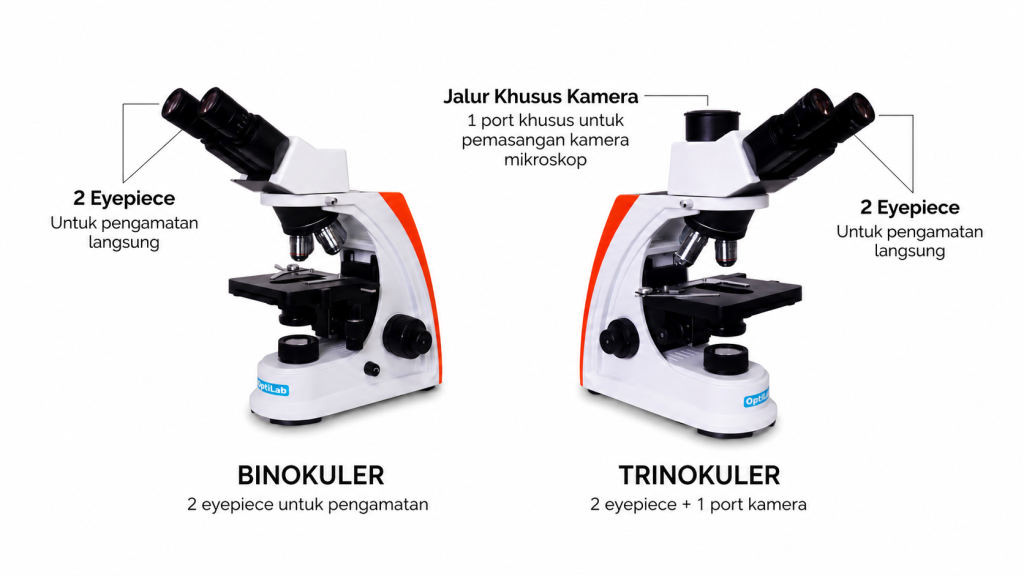
For example, the OptiLab IRIS-4 microscope is a binocular microscope with two eyepiece for direct observation. Binocular microscopes can still be used with a camera, but mounting the camera requires the use of one of the eyepiece channels, so the user cannot use both eyepieces simultaneously for direct observation. Meanwhile, trinocular microscopes have an additional optical channel that can be used for camera integration.
With this configuration, users can continue to observe the specimen through both eyepieces while using the camera to display or document their observations.
Choose According to Your Laboratory's Needs
Ultimately, there is no single configuration that is best suited for all needs. Conventional microscopes are suitable for direct observation, while microscopes equipped with camera systems offer greater flexibility when documentation and visualization are part of laboratory activities.
Therefore, before purchasing a microscope, consider the type of specimens, frequency of use, number of users, and whether the observation results need to be saved or displayed on a screen.
To view the available selection of microscopes and microscope cameras, you can visit OptiLab product page on the Miconos website