


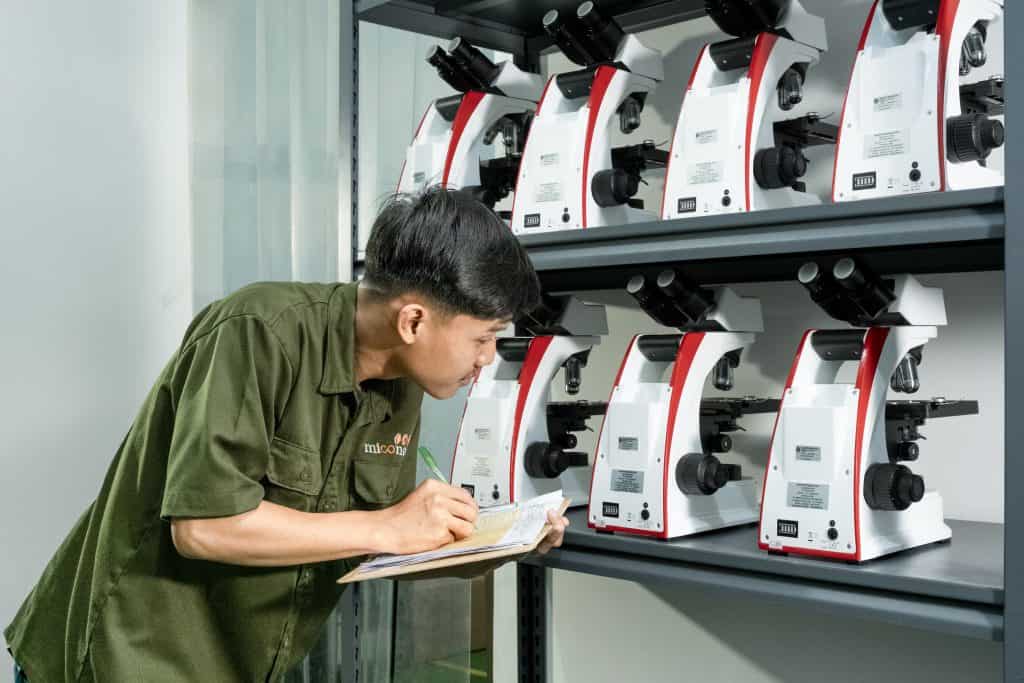
Choosing the right microscope for a laboratory begins with understanding the observation requirements. The type of specimen, observation method, level of detail required, and intended use must all be considered to ensure that the selected microscope is suitable for the laboratory’s activities.
How to Choose a Microscope for a Laboratory
When determining how to choose the right microscope, every laboratory has different needs. Therefore, the selection of a microscope depends not only on the magnification level, but also on the type of microscope, the optical configuration, and the need to document observation results.
Determine the Type of Observation
The first step is to identify the object to be observed. A biology lab, for example, may need a microscope to observe cells, tissues, microorganisms, or plant specimens. Therefore, the type of microscope should be selected based on the characteristics of the specimen and the observation method, not solely on the highest magnification.
Pay Attention to the Optical System and the Lens
The optical system is a crucial component that determines image quality. Each lens has a different magnification, Numerical Aperture (NA), and field of view.
Low magnification can be used to examine a larger area of the specimen. Next, an objective with higher magnification can be used when the user needs to observe finer details.
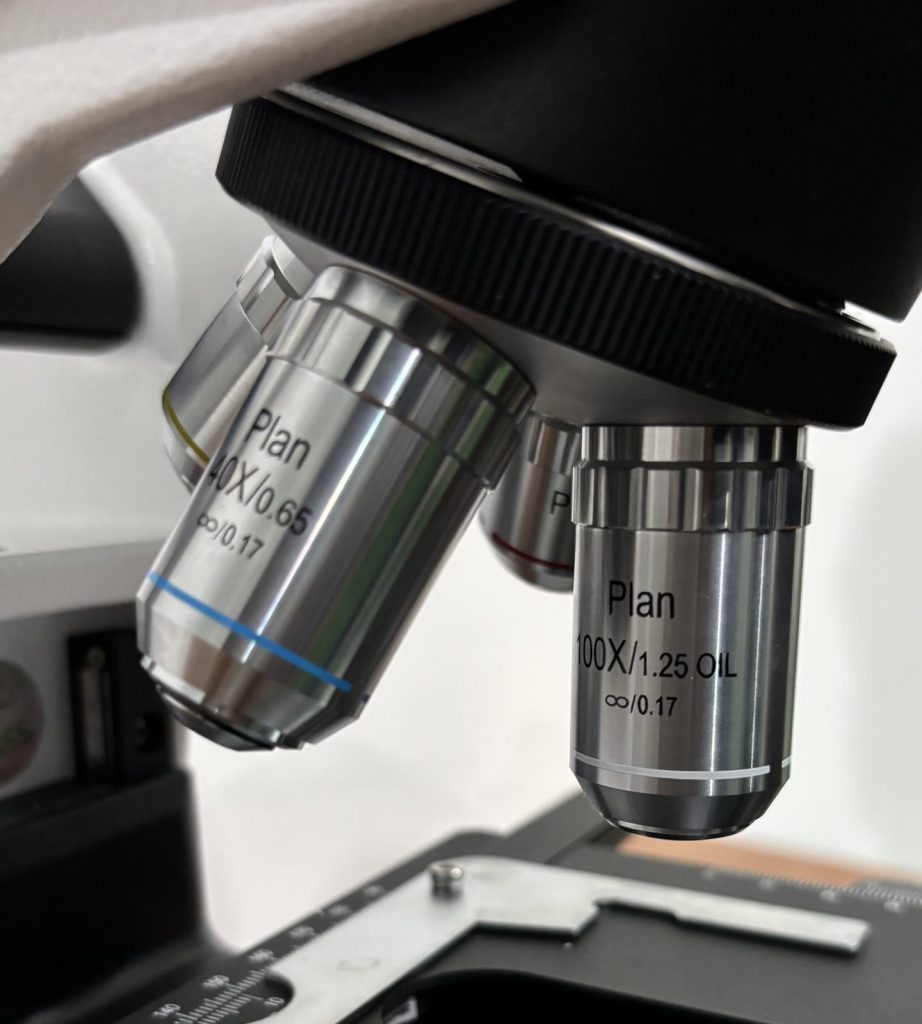
For example, the OptiLab IRIS-4 uses a Plan Infinity objective with options including 4X, 10X, 40X, and 100X/1.25 Oil. With a 10X eyepiece, this microscope has a total magnification range of up to 1000X.
Pay Attention to the Focus and Lighting Systems
The focusing system is also important to consider because it affects how easily you can capture sharp images. Coarse focus helps you find the focus position, while fine focus is used to make more precise adjustments.
In addition, the lighting system needs to be adjusted to suit the observation requirements. The ability to adjust light intensity can be a valuable feature when the microscope is used with various types of specimens.
Adjust the Head Configuration
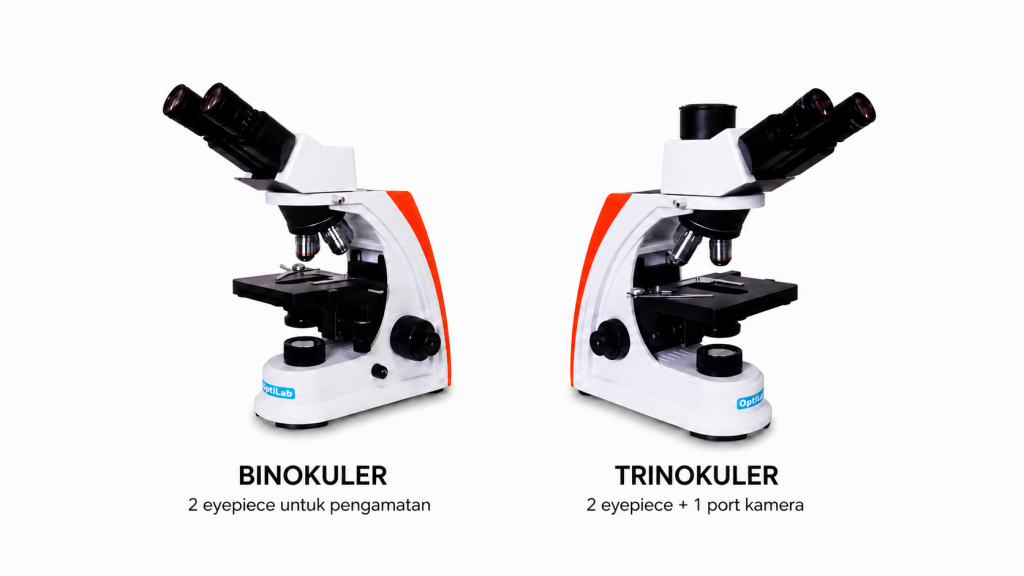
The choice of microscope head is an important consideration when the microscope will be used with a camera. A binocular head is used for observation through two eyepieces, while a trinocular head has an additional port for camera integration.
Microscopes used on a regular basis should provide comfort during observation. The interpupillary distance, eyepiece position, focusing mechanism, and stage movement are some of the aspects to consider.
In addition, the availability of service, replacement parts, warranties, and technical support are also important factors to consider to ensure the device can be used over the long term.
Choose a Microscope That Meets Your Laboratory's Needs
Ultimately, the right microscope is the one that suits the specimen, the observation method, the level of detail, and the laboratory’s documentation needs. Not all laboratories require the same configuration.
For biological microscopy needs, with a choice of binocular or trinocular configurations, the OptiLab IRIS-4 is an option worth considering. View OptiLab products on the Miconos website to learn about the available microscope options and specifications.